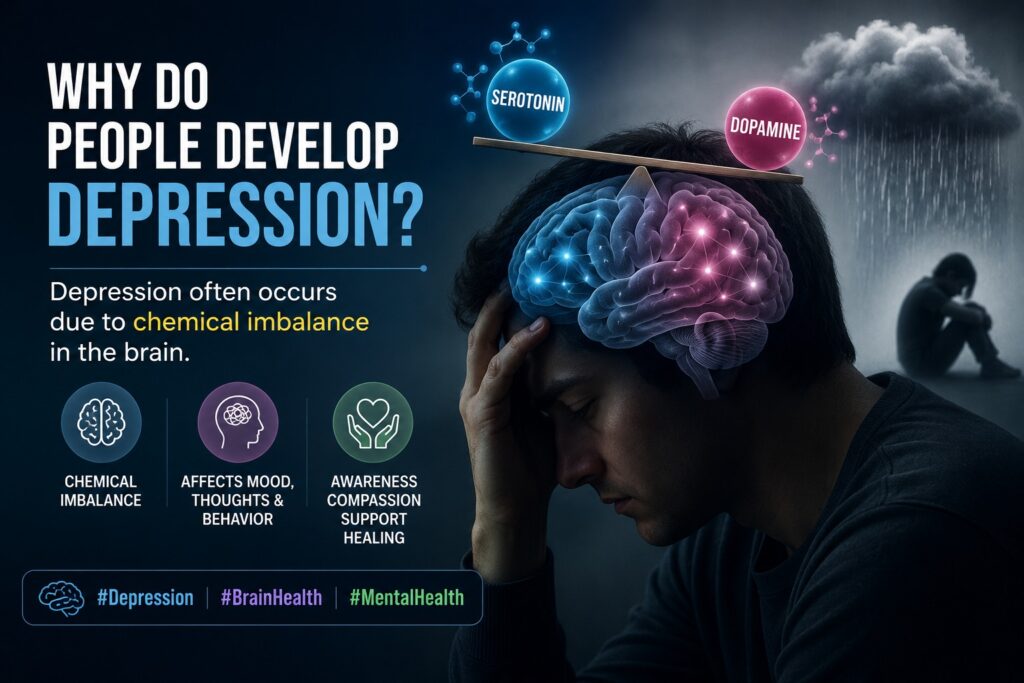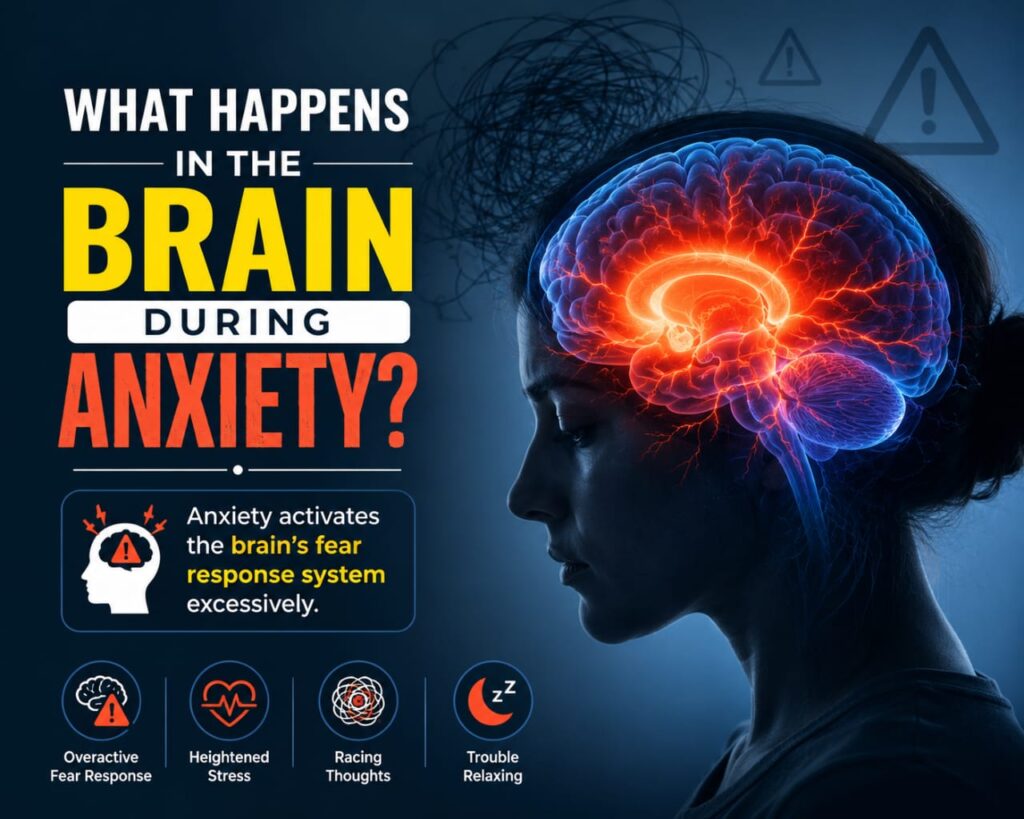
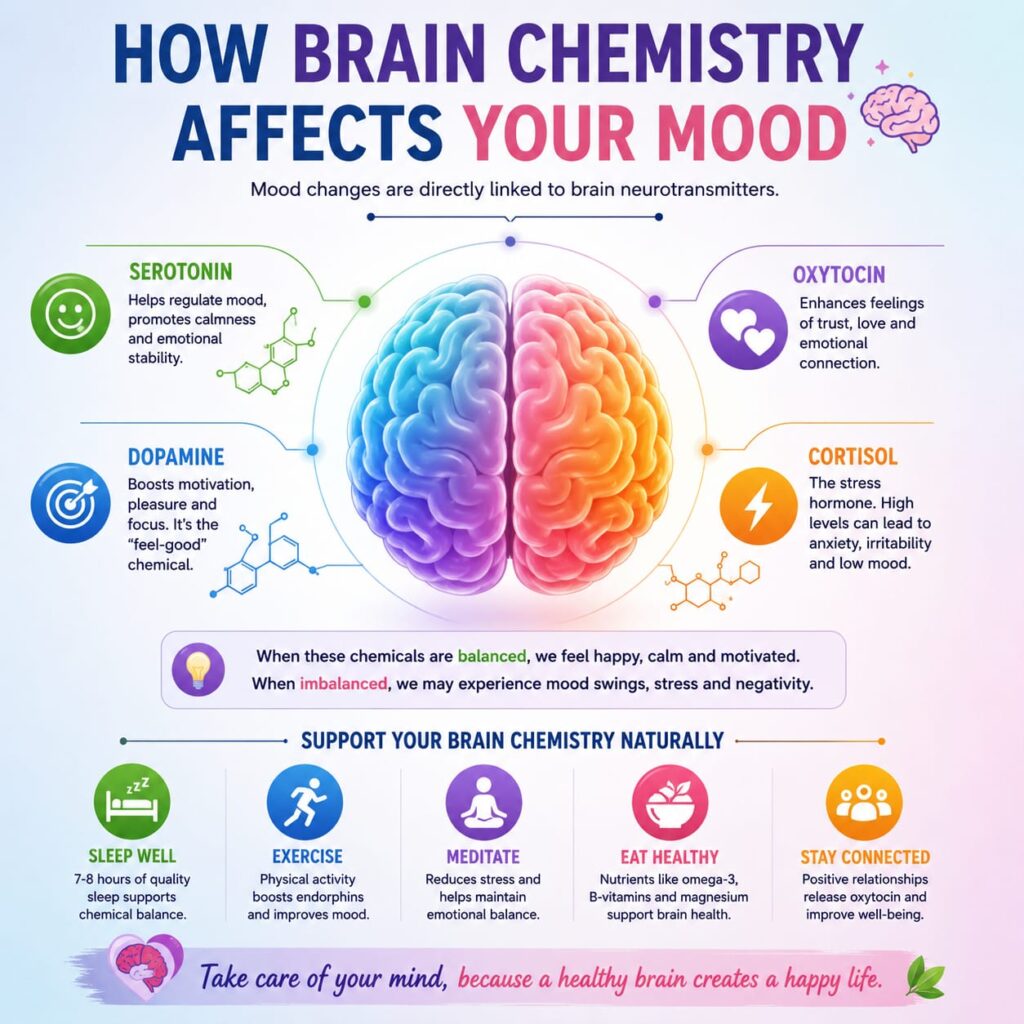
Mood changes are strongly connected to brain neurotransmitters, which control emotions, thoughts, energy, and behavior. When these chemicals are balanced, you feel stable and positive. When they are disturbed, mood swings, stress, anxiety, and low motivation can appear. Understanding brain chemistry helps you manage emotional health better in daily life.
1. Serotonin – The Mood Stabilizer
Serotonin is one of the most important neurotransmitters for emotional balance. It helps regulate happiness, calmness, sleep cycle, and overall mental stability. When serotonin levels are healthy, a person feels relaxed, confident, and emotionally steady.
Low serotonin levels are linked with sadness, irritability, anxiety, and sleep problems. Many people experience low mood during lack of sunlight, poor diet, or stress because these factors reduce serotonin production in the brain.
Natural ways to support serotonin include regular exercise, exposure to sunlight, eating healthy foods, and maintaining good sleep habits.
2. Dopamine – The Motivation and Reward Chemical
Dopamine is responsible for motivation, pleasure, focus, and reward-driven behavior. It is released when you achieve goals, complete tasks, or experience something enjoyable.
Balanced dopamine levels help you stay productive, motivated, and focused. However, low dopamine can lead to laziness, low energy, lack of interest, and difficulty concentrating.
Overstimulation from unhealthy habits like excessive screen time or addiction can also disturb dopamine balance. Healthy goal setting, exercise, and productive routines help maintain stable dopamine levels.
3. Cortisol – The Stress Hormone
Cortisol is the main hormone released during stress. It helps the body respond to pressure, danger, or challenges by increasing alertness and energy in short-term situations.
However, when stress becomes chronic, cortisol stays elevated for long periods. This can negatively affect mood, causing anxiety, irritability, fatigue, and emotional instability.
High cortisol levels can also affect sleep quality and weaken mental clarity. Stress management techniques like meditation, deep breathing, exercise, and relaxation are important to control cortisol levels.
4. Oxytocin – The Bonding Hormone
Oxytocin is known as the “love hormone” because it is linked with trust, bonding, and emotional connection. It is released during positive social interactions like hugging, talking with loved ones, or helping others.
Higher oxytocin levels help reduce stress and increase feelings of safety, comfort, and happiness. Strong relationships and social support play a major role in maintaining emotional well-being.
Loneliness or lack of social connection can reduce oxytocin levels and negatively impact mood over time.
5. Endorphins – The Natural Pain Relievers
Endorphins are chemicals that act as natural painkillers and mood boosters. They are released during physical activity, laughter, or enjoyable experiences.
When endorphin levels increase, you feel happy, energetic, and relaxed. This is also known as the “feel-good” effect after exercise.
Low endorphin levels may contribute to stress, low mood, and emotional discomfort. Activities like running, dancing, sports, and even laughing regularly can naturally boost endorphins.
6. Lifestyle Habits and Brain Chemistry
Daily habits have a powerful impact on brain chemistry. Poor sleep, unhealthy food, stress, and lack of activity can disturb neurotransmitter balance and lead to emotional instability.
On the other hand, a healthy lifestyle supports stable brain function. Regular exercise improves serotonin and dopamine levels. Good sleep helps the brain reset and repair itself. Balanced nutrition provides essential nutrients for neurotransmitter production.
Mindfulness, meditation, and relaxation techniques reduce cortisol levels and improve emotional control. Positive social relationships also increase oxytocin and improve mental well-being.