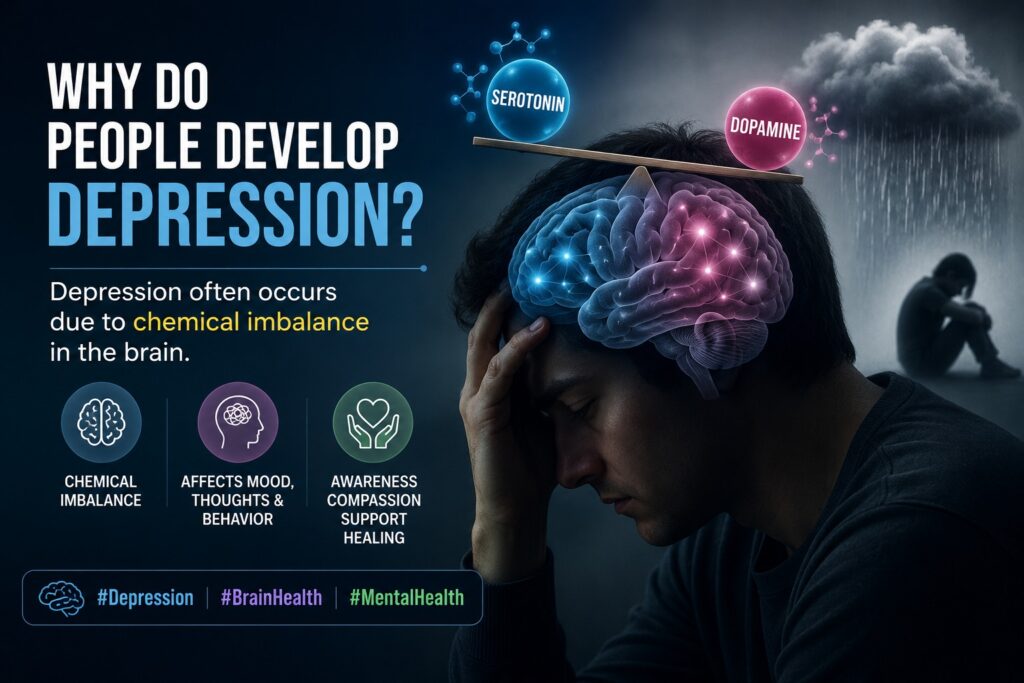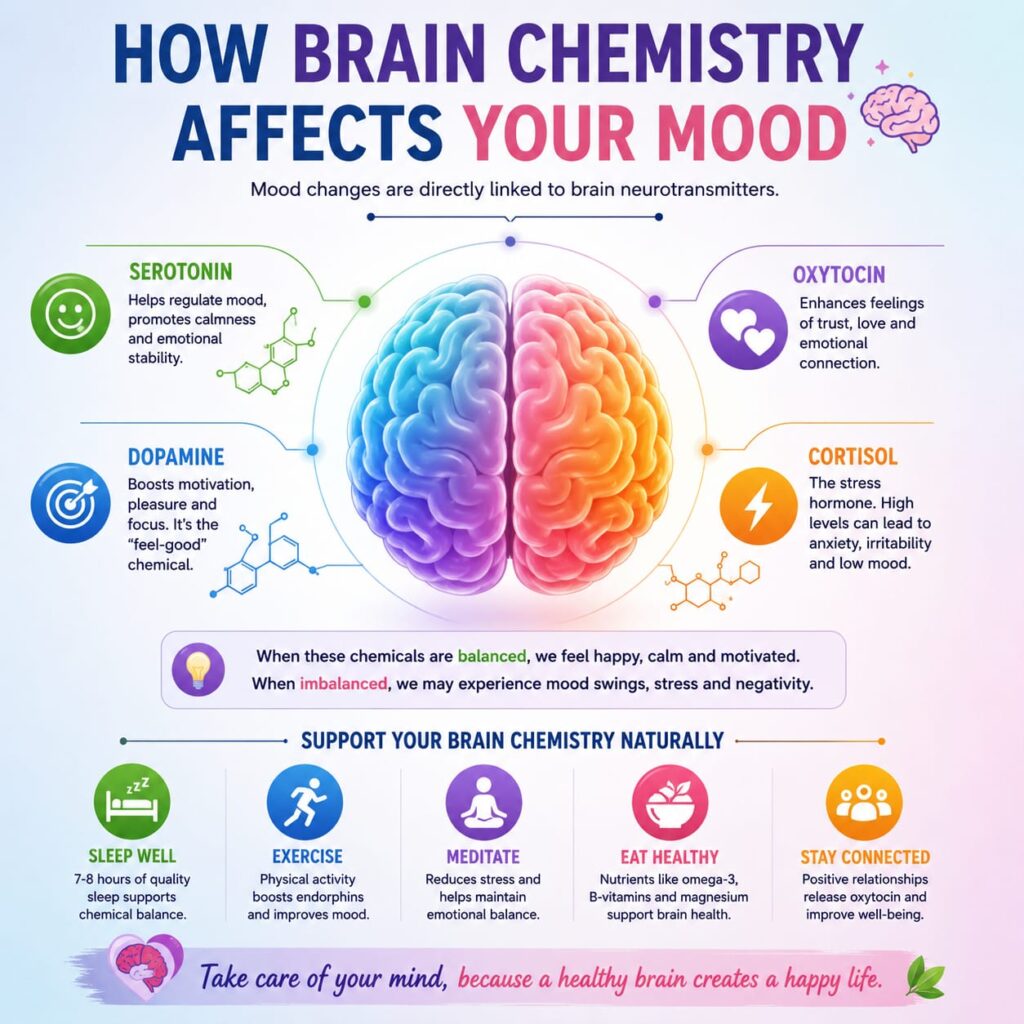
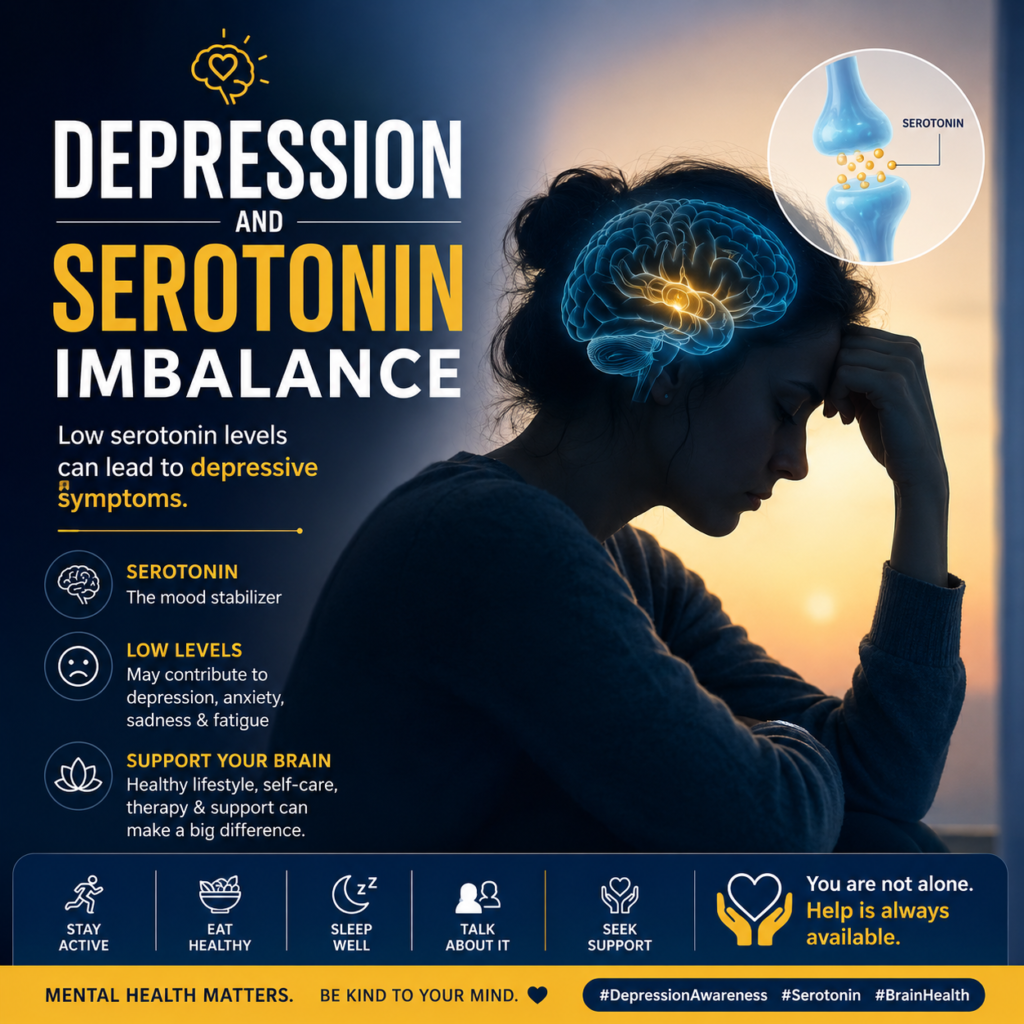
Depression is more than just feeling sad or stressed for a short time. It is a serious mental health condition that affects emotions, thoughts, sleep, energy, and daily life. One major factor linked to depression is serotonin imbalance in the brain. Serotonin is known as the “feel-good” chemical because it helps regulate mood, emotional stability, and mental well-being. When serotonin levels become low, people may experience sadness, anxiety, fatigue, and loss of motivation. Understanding this connection can help people recognize symptoms early and seek proper support for better mental health.
1. What is Serotonin?
Serotonin is a neurotransmitter that helps brain cells communicate with each other. It plays an important role in:
Mood regulation
Sleep quality
Emotional balance
Stress control
Memory and focus
Healthy serotonin levels help people feel calm, positive, emotionally balanced, and mentally active.
2. How Serotonin Imbalance Causes Depression
Low serotonin levels can negatively affect the brain’s emotional processing system. This may lead to depressive symptoms and emotional instability. People with serotonin imbalance often struggle with:
Constant sadness
Lack of motivation
Anxiety and stress
Emotional emptiness
Mood swings
Long-term stress, unhealthy habits, and emotional pressure can further worsen serotonin imbalance.
3. Common Symptoms of Depression
Depression symptoms can affect both mental and physical health. Some common signs include:
Emotional Symptoms
Hopelessness
Irritability
Feeling emotionally disconnected
Loss of interest in activities
Physical Symptoms
Fatigue and low energy
Sleep disturbances
Appetite changes
Difficulty concentrating
Behavioral Symptoms
Social withdrawal
Reduced productivity
Lack of confidence
Avoiding daily responsibilities
Recognizing these symptoms early is important for mental health recovery.
4. Causes of Serotonin Imbalance
Several factors may contribute to low serotonin levels and depression, including:
Chronic stress
Poor sleep routine
Unhealthy diet
Lack of physical activity
Emotional trauma
Hormonal imbalance
Genetics and family history
Modern lifestyles with high stress and limited emotional support can also impact brain health.
5. Natural Ways to Support Serotonin Levels
Healthy lifestyle habits can help support serotonin production and improve mental wellness naturally.
Regular Exercise
Physical activity helps reduce stress and improve mood.
Healthy Nutrition
Foods rich in nutrients and tryptophan may support serotonin production.
Quality Sleep
Good sleep helps maintain emotional balance and brain function.
Sunlight Exposure
Natural sunlight may improve serotonin activity and mood stability.
Stress Management
Meditation, mindfulness, and self-care practices can support mental health.
6. Importance of Mental Health Support
Depression should never be ignored. Seeking help from mental health professionals can improve emotional well-being and quality of life. Treatment may include:
Counseling and therapy
Stress management techniques
Lifestyle improvements
Medical support when necessary
Talking openly about mental health helps reduce stigma and encourages people to seek support without fear.